IP addresses by country
Every public IP address is allocated to an organisation, and every organisation is registered in a country. Aggregating those records gives a picture of how the address space is actually distributed — which is far less even than the map of internet users.
How allocation works
IANA hands large blocks to five regional internet registries, each responsible for a part of the world:
| Registry | Region |
|---|---|
| ARIN | United States, Canada, parts of the Caribbean |
| RIPE NCC | Europe, Middle East, Central Asia |
| APNIC | Asia-Pacific |
| LACNIC | Latin America and the Caribbean |
| AFRINIC | Africa |
Each registry assigns from its pool to member networks and publishes, daily, exactly which blocks went where. Those files are the basis of every country page here.
Why the distribution looks unfair
IPv4 allocation tracks history rather than population. Networks that connected early received blocks under far looser rules, and nobody took them back. The result is that a handful of early-adopting countries hold a share of IPv4 wildly out of proportion to the number of people living in them, while large, late-connecting populations run on carrier-grade NAT.
IPv6 has no such constraint, which is why adoption is highest precisely where IPv4 was scarcest.
Country pages
Each country page below shows its IPv4 and IPv6 allocations, its registry, its largest networks by address count, and current IPv6 adoption.
Browse every country
239 countries and territories
-
 United States 1,606,255,520
 -
 China 342,983,936
 -
 Japan 188,703,296
 -
 United Kingdom 138,942,528
 -
 Germany 126,373,504
 -
 South Korea 112,497,920
 -
 France 81,574,992
 -
 Brazil 79,646,464
 -
 Canada 67,932,416
 -
 Italy 54,082,944
 -
 Netherlands 47,947,552
 -
 Australia 46,093,056
 -
 Russia 45,212,736
 -
 India 42,004,224
 -
 Taiwan 35,739,648
 -
 Spain 31,958,656
 -
 Sweden 31,306,528
 -
 Mexico 28,963,584
 -
 Singapore 27,828,544
 -
 South Africa 27,182,848
 -
 Egypt 24,152,832
 -
 Switzerland 23,269,488
 -
 Poland 20,038,600
 -
 Argentina 19,433,728
 -
 Indonesia 19,361,024
 -
 Colombia 17,518,080
 -
 Türkiye 16,821,888
 -
 Vietnam 16,501,760
 -
 Hong Kong SAR China 16,014,400
 -
 Norway 15,619,600
 -
 Finland 13,921,344
 -
 Belgium 12,303,232
 -
 Morocco 12,274,176
 -
 Denmark 12,017,696
 -
 Saudi Arabia 11,237,184
 -
 Austria 11,174,496
 -
 Iran 10,838,272
 -
 Ireland 10,087,744
 -
 Chile 9,646,848
 -
 Czechia 9,558,464
 -
 Thailand 9,332,992
 -
 Ukraine 9,092,352
 -
 Seychelles 8,970,496
 -
 Israel 8,048,512
 -
 Tunisia 7,877,632
 -
 Romania 7,832,192
 -
 United Arab Emirates 7,203,584
 -
 Venezuela 6,703,104
 -
 Malaysia 6,700,544
 -
 Portugal 6,692,896
 -
 New Zealand 6,531,328
 -
 Philippines 6,266,688
 -
 Kenya 6,254,592
 -
 Hungary 5,922,048
 -
 Greece 5,722,240
 -
 Pakistan 5,522,688
 -
 Algeria 4,767,232
 -
 Bulgaria 4,341,568
 -
 Lithuania 4,100,608
 -
 Mauritius 3,698,944
 -
 Kazakhstan 3,366,400
 -
 Peru 3,250,176
 -
 Nigeria 3,217,408
 -
 Ecuador 2,727,168
 -
 Slovakia 2,684,672
 -
 Slovenia 2,683,136
 -
 Uruguay 2,516,736
 -
 Croatia 2,355,968
 -
 Costa Rica 2,334,976
 -
 Serbia 2,315,776
 -
 Ghana 2,203,904
 -
 Panama 2,188,544
 -
 Bangladesh 2,086,720
 -
 Kuwait 1,907,456
 -
 Sudan 1,891,072
 -
 Latvia 1,850,624
 -
 Luxembourg 1,848,320
 -
 Belarus 1,793,536
 -
 Côte d’Ivoire 1,718,528
 -
 Zambia 1,651,968
 -
 Dominican Republic 1,623,296
 -
 Uganda 1,426,176
 -
 Cyprus 1,363,520
 -
 Estonia 1,362,728
 -
 Georgia 1,306,944
 -
 Angola 1,289,984
 -
 Syria 1,278,720
 -
 Moldova 1,257,472
 -
 Bolivia 1,170,176
 -
 Paraguay 1,154,560
 -
 Tanzania 1,101,056
 -
 Oman 951,872
 -
 Iceland 920,320
 -
 Palestinian Territories 876,288
 -
 Qatar 847,744
 -
 Bosnia & Herzegovina 794,880
 -
 Azerbaijan 772,864
 -
 Puerto Rico 770,304
 -
 North Macedonia 684,800
 -
 Malta 681,344
 -
 Armenia 667,936
 -
 El Salvador 663,808
 -
 Guatemala 654,848
 -
 Jordan 647,936
 -
 Cameroon 601,856
 -
 British Virgin Islands 589,824
 -
 Nepal 584,192
 -
 Madagascar 579,840
 -
 Lebanon 569,472
 -
 Sri Lanka 563,456
 -
 Malawi 556,544
 -
 Trinidad & Tobago 543,744
 -
 Honduras 536,064
 -
 Albania 505,152
 -
 Namibia 485,120
 -
 Libya 461,056
 -
 Mozambique 449,536
 -
 Iraq 449,088
 -
 Cambodia 439,808
 -
 Bahrain 414,976
 -
 Nicaragua 411,136
 -
 Réunion 409,856
 -
 Senegal 407,296
 -
 Gabon 393,728
 -
 Ethiopia 370,176
 -
 Togo 354,816
 -
 Macao SAR China 339,712
 -
 Burkina Faso 339,200
 -
 Uzbekistan 333,312
 -
 Kyrgyzstan 300,032
 -
 Rwanda 283,392
 -
 Gambia 275,968
 -
 European Union 267,520
 -
 Cuba 257,024
 -
 Antigua & Barbuda 250,368
 -
 Myanmar (Burma) 246,784
 -
 Yemen 233,472
 -
 Jamaica 224,256
 -
 Guam 218,624
 -
 Brunei 216,064
 -
 Curaçao 198,656
 -
 Montenegro 193,280
 -
 Congo - Kinshasa 182,016
 -
 Mongolia 181,504
 -
 Afghanistan 178,176
 -
 Barbados 168,704
 -
 Botswana 166,144
 -
 New Caledonia 161,536
 -
 Jersey 156,416
 -
 Haiti 154,880
 -
 Benin 150,272
 -
 Belize 149,248
 -
 Fiji 143,616
 -
 Congo - Brazzaville 141,824
 -
 Bahamas 138,240
 -
 Isle of Man 134,656
 -
 Martinique 134,656
 -
 Gibraltar 131,840
 -
 U.S. Virgin Islands 130,304
 -
 Guadeloupe 124,928
 -
 Lesotho 121,344
 -
 Aruba 111,872
 -
 Bermuda 108,800
 -
 Zimbabwe 105,472
 -
 Liechtenstein 104,704
 -
 Laos 98,880
 -
 Maldives 93,952
 -
 Mali 92,672
 -
 Cayman Islands 91,136
 -
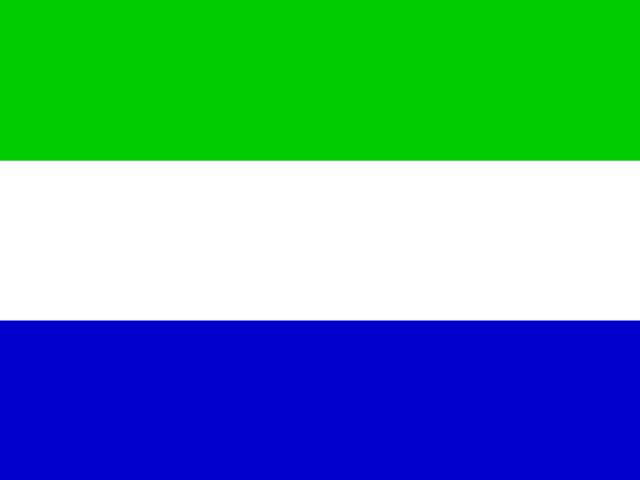 Sierra Leone 85,760
 -
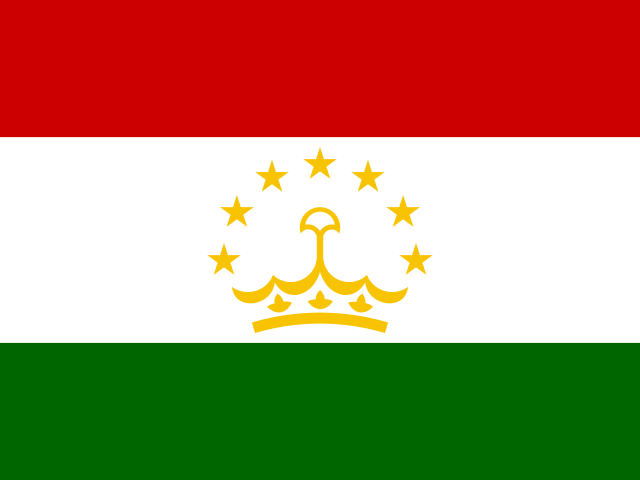 Tajikistan 85,568
 -
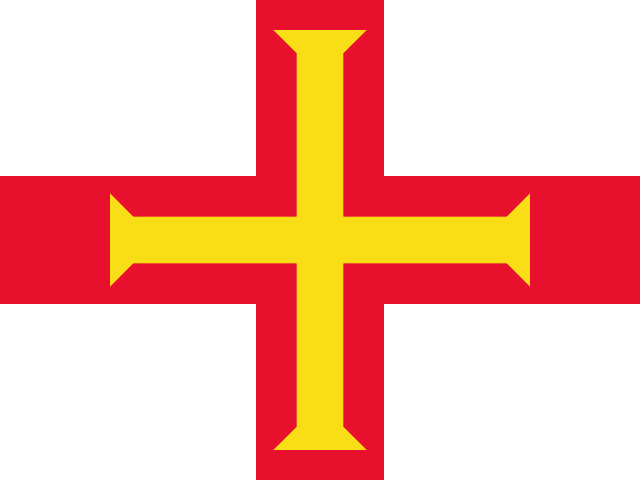 Guernsey 83,712
 -
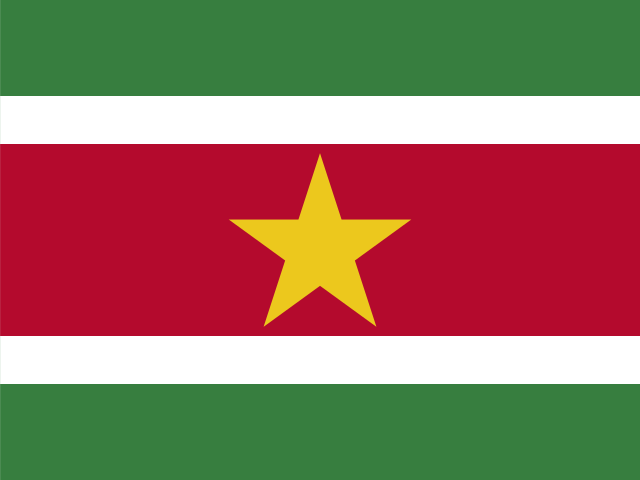 Suriname 82,688
 -
 French Polynesia 75,520
 -
 Guyana 69,888
 -
 Papua New Guinea 67,584
 -
 Monaco 65,792
 -
 Andorra 62,720
 -
 Eswatini 55,040
 -
 Somalia 51,968
 -
 Bhutan 51,456
 -
 Mauritania 50,688
 -
 Djibouti 47,360
 -
 Faroe Islands 45,056
 -
 Niger 45,056
 -
 San Marino 40,704
 -
 Liberia 40,192
 -
 Guinea 39,168
 -
 Cape Verde 38,144
 -
 Burundi 36,608
 -
 Greenland 34,304
 -
 Sint Maarten 34,304
 -
 Marshall Islands 31,232
 -
 Timor-Leste 28,928
 -
 South Sudan 26,368
 -
 Chad 25,856
 -
 Caribbean Netherlands 24,832
 -
 St. Kitts & Nevis 23,040
 -
 French Guiana 22,528
 -
 Turkmenistan 22,336
 -
 St. Lucia 22,016
 -
 Samoa 19,968
 -
 Equatorial Guinea 17,920
 -
 Vanuatu 16,384
 -
 Northern Mariana Islands 16,128
 -
 Solomon Islands 14,336
 -
 Tonga 11,520
 -
 Grenada 11,264
 -
 São Tomé & Príncipe 11,264
 -
 Vatican City 10,752
 -
 Dominica 10,496
 -
 Turks & Caicos Islands 10,496
 -
 St. Vincent & Grenadines 10,496
 -
 Nauru 10,240
 -
 Anguilla 9,728
 -
 Cook Islands 8,704
 -
 Micronesia 8,704
 -
 Comoros 8,448
 -
 Tuvalu 8,192
 -
 Falkland Islands 7,168
 -
 Guinea-Bissau 6,656
 -
 Palau 6,144
 -
 Central African Republic 5,632
 -
 American Samoa 5,120
 -
 Åland Islands 4,864
 -
 St. Pierre & Miquelon 4,608
 -
 Eritrea 4,096
 -
 Kiribati 4,096
 -
 St. Martin 3,584
 -
 Wallis & Futuna 3,584
 -
 British Indian Ocean Territory 3,072
 -
 Tokelau 3,072
 -
 Niue 2,048
 -
 Montserrat 1,280
 -
 Antarctica 1,024
 -
 North Korea 1,024
 -
 Mayotte 1,024
 -
 St. Barthélemy 768
 -
 Norfolk Island 768
Frequently asked questions
Where does this data come from?
From the delegated-statistics files the five regional internet registries publish daily, combined with the public IP-to-ASN dataset and APNIC's IPv6 capability measurements.
Why does a small country hold so many addresses?
Allocation reflects when a network joined the internet, not population. Countries with early academic or commercial networks hold blocks far larger than their size would suggest, and those allocations were never reclaimed.
Does holding addresses mean they are used there?
Not necessarily. A block is registered to an organisation's home country, and that organisation may route it anywhere. This is one reason IP geolocation gets things wrong.